The permanent exhibition of the German Port Museum can literally be explored on foot by walking around the grounds. The exhibits inside Shed 50 are rather small compared to the floating exhibits or the cranes on the quay, but of course they are all equally important for learning about the port's history.
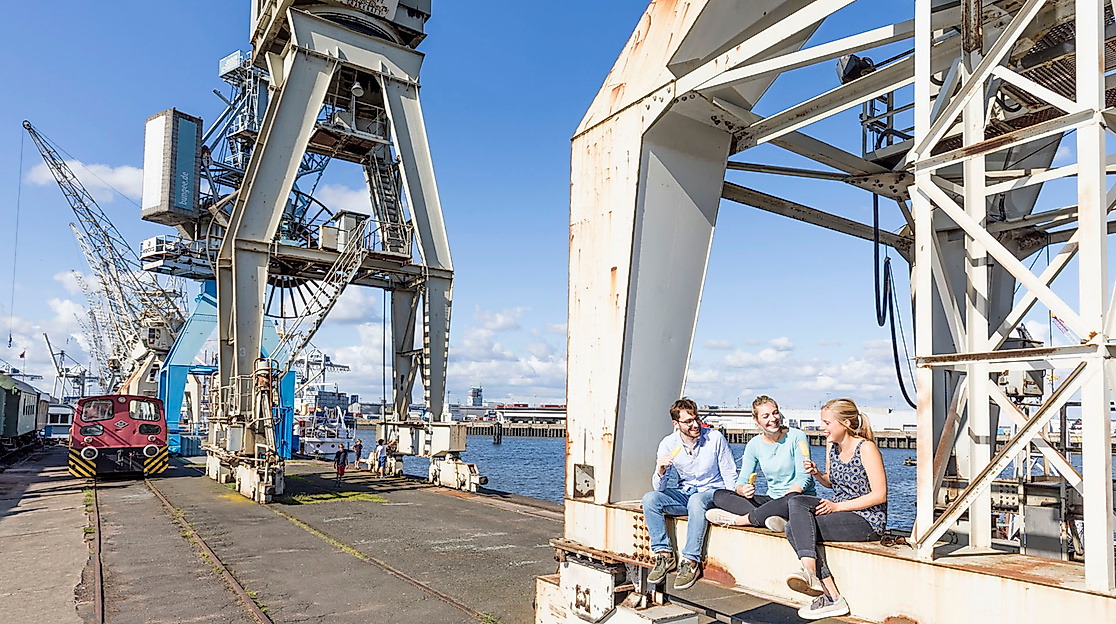
In the open-air area stand the first large pieces of equipment from the early days of containerization : van carriers, which were developed for transporting the "boxes" at the terminals. How they work is demonstrated regularly. The large gantry cranes, which once handled the transfer between ships and warehouses, line the Bremen quayside.
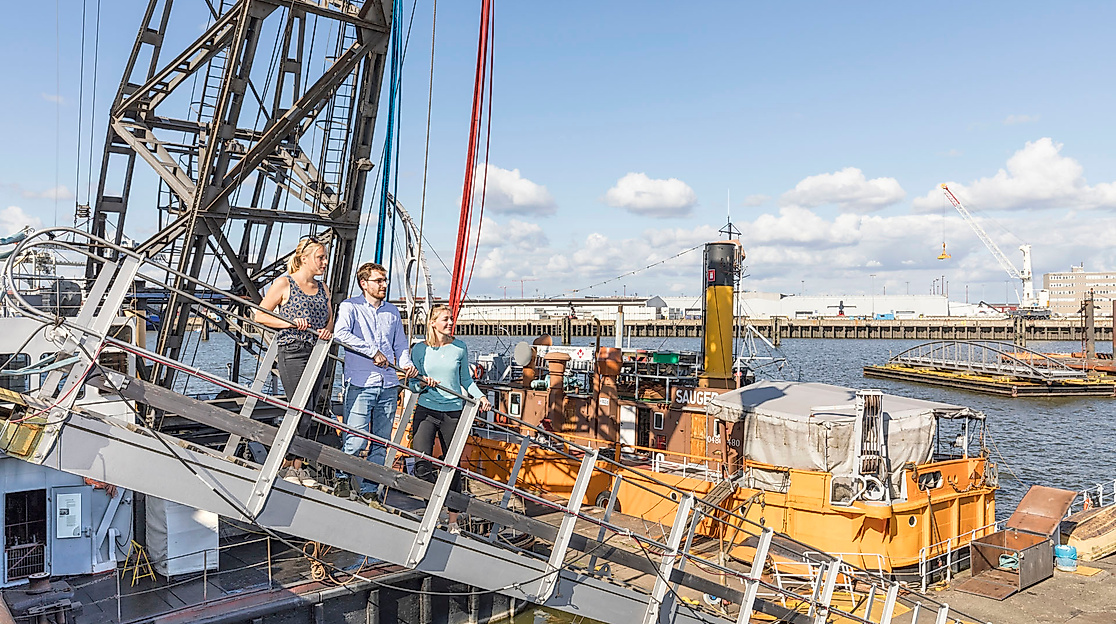
The pontoon bridge provides access to the steam dredger SAUGER IV from 1909 and the floating steam crane SAATSEE from 1917. Both large vessels are equipped with steam engines that are operated one weekend a month. An exhibition on the Hamburg box barge H 11347 from 1913 illustrates the work of the barge captain and life on board.
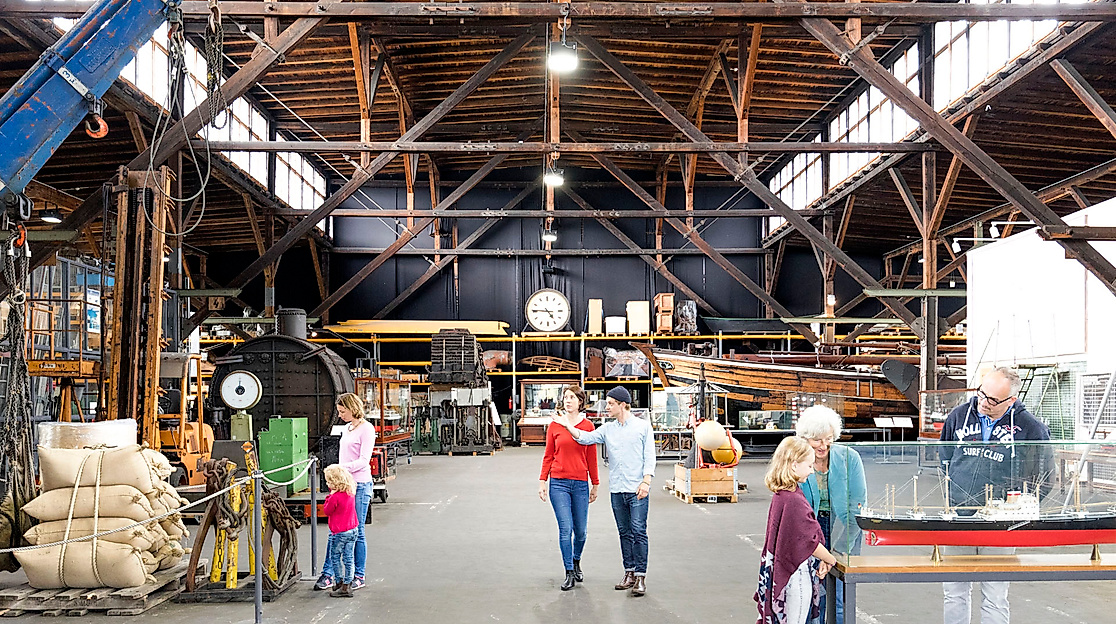
In the exhibition depot in Shed 50A, visitors can find information about goods from all over the world, ship models, or the historical development of the port facilities.
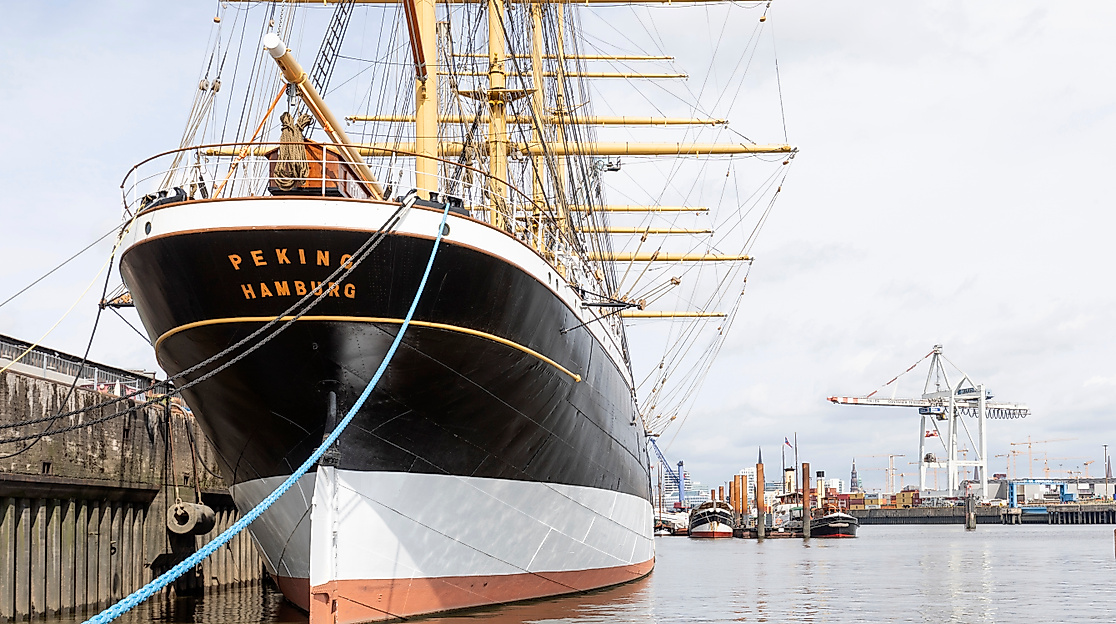
The PEKING is the first visible object in the collection of the German Port Museum. The four-masted barque is one of the last large cargo ships that, at the beginning of the 20th century, could still compete with steam and motor ships due to its speed, safety, and precision. The ship served as a transport vessel for the then highly sought-after nitrate from Chile.
The listed BLEICHEN, which is owned by the Hamburg Maritime Foundation, represents an entire generation of cargo ships.


