Water mill Karoxbostel

Since the Middle Ages, the water mill in the small town of Karoxbostel, located in the municipality of Seevetal in Lower Saxony, has stood at this place.

The Karoxbostel mill offers a small journey into the past; since its original construction, it has been repeatedly reconstructed or renovated. The efforts of a local association are to thank for the fact that the mill has once again ground grain since 2014. Guided tours are possible by arrangement on any day of the week.

THIS MIGHT INTEREST YOU AS WELL Further recommendations

Treppenviertel Blankenese
© Jürgen Nerger

Treppenviertel Blankenese

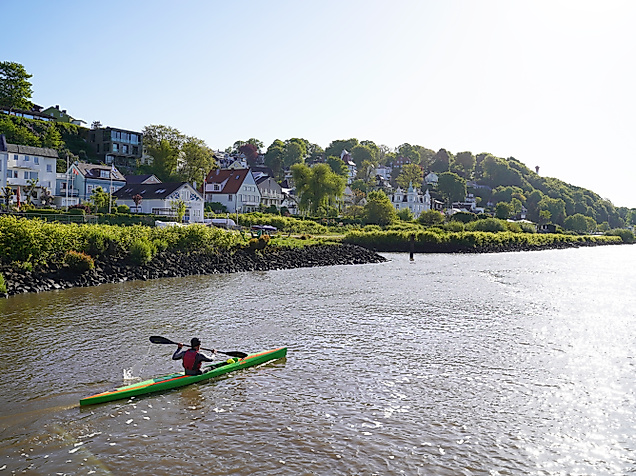
The Blankenese Treppenviertel offers its residents a delightful view of the Elbe and of the passing ships.

Treppenviertel Blankenese
st-nikolai_c-2018-thisisjulia-photography-2
© ThisIsJulia Photography

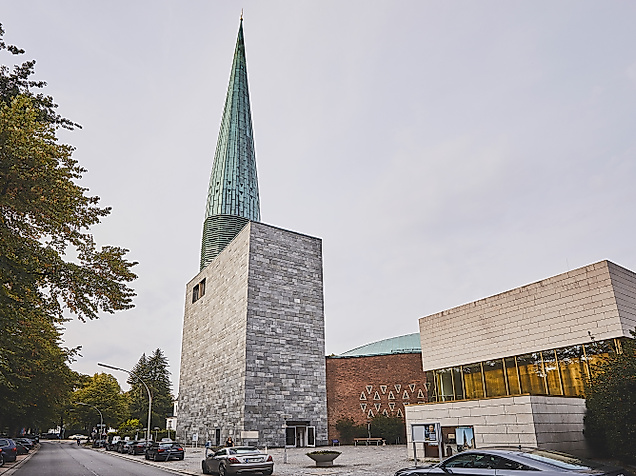
The main church at Klosterstern. Hauptkirche St. Nikolai am Klosterstern

The new building was erected from 1846 to 1874 in the neo-Gothic style to designs by the English architect Gilbert Scott and was destroyed by the bombings during the Second World War in 1943; the ruins were demolished in 1951.

Unlike the other principal churches, after the war the parish of St. Nikolai decided in 1956 against rebuilding the church on the Hopfenmarkt and instead dared a new beginning at the Klosterstern in Harvestehude, a densely populated district of the city. The new church on Klosterstern (Harvestehuder Weg 118) was built according to designs by Gerhard Langmaak and was dedicated in 1962.
Considered as both a special feature and attraction is the altar mosaic based on a design by Oskar Kokoschka, as well as the Coester window from 1939.
The former location of the main church of St. Nikolai with the 147-metre church tower – the third highest in Germany – is a ruin worth seeing on Hopfenmarkt and is considered a memorial and as a place for exhibitions and events.


Hauptkirche St. Nikolai am Klosterstern
st-petri_c-2018-thisisjulia-photography-1
© ThisIsJulia Photography

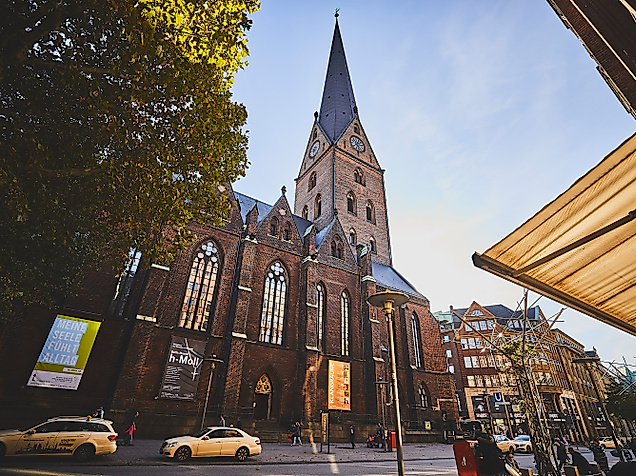
Hauptkirche St. Petri

It was probably founded at the beginning of the 11th century, but it was first documented in 1195 as a "market church". In around 1310/20, the construction of a triple naved, Gothic basilica was begun. With the construction of a second southern nave around 1418, the essential extension works had been completed.

A second tower completed in 1516 was even higher than the cathedral, and it set the standard for all later church tower constructions in Hamburg. In 1842 the church suffered from the Great Fire; luckily, most of the works of art could be saved. The medieval structure was re-dedicated as early as 1849, but with many alterations to the church building.


Hauptkirche St. Petri

Languages

Google translator for other languages

Please note that this is an automatic translation.
For better information, you can always switch to the German or English version